
Workshop Report · Sigma USA · Burbank, CA
Capture the Sound
The Art of Music Photography
An afternoon inside Sigma USA’s Burbank studio changed how I think about concert and music portrait photography. Here’s everything I took home; from camera settings to stage presence to lighting setups I got to shoot myself.
Sigma 17–40mm f/1.8 DC A · Canon R5 Mark II
Workshop led by Ambassador Anabel DFlux
A few weeks after shooting the Sigma 60–600 around Los Angeles, I found myself back in Sigma USA’s world; this time at their Burbank location for a hands-on music photography workshop called Capture the Sound: The Art of Music Photography. Led by Sigma ambassador Anabel DFlux, it covered everything from how to land your first show to the craft of directing a band through a portrait session. I got to shoot with Sigma’s 17–40mm f/1.8 DC Art lens throughout the day, and walked away with a completely restructured approach to shooting music and stylized portraits.
What follows is part field report, part reference guide: the kind of notes I wish I’d had before my first concert shoot or theater shoot.
The Lens of the Day: Sigma 17–40mm f/1.8 DC Art
A wide-aperture zoom built for APS-C sensors. f/1.8 across the entire zoom range is rare and makes all the difference in low-light concert environments. Sharp wide open, fast focusing, and compact enough to stay out of the way in a photo pit. The lesson the day reinforced: wide aperture glass isn’t a luxury in music photography, it’s the baseline.
Breaking In: How to Start Shooting Music
Anabel opened with the question most aspiring music photographers are afraid to ask out loud: how do I actually get in the room? The answer was refreshingly practical; there are multiple doors, and most of them are easier to open than you’d think.
- Contact bands directly through social media – Reach out to smaller local acts who are building their presence. Offer your work as a trade. Most independent artists are hungry for good photos and don’t have a dedicated photographer yet.
- Ask venues to be their in-house photographer for a night – Small to mid-size venues often have no one covering their shows. Being the venue’s photographer gives you access, a byline, and a portfolio.
- Go through PR & media pass contacts – Once you have some work, you can approach PR firms and publications as a contributor to get credentialed media passes to larger shows.
- Just walk into a bar with your camera – This is the most underrated starting point. Music nights at small bars are low-pressure environments. Even shooting just two songs is valuable — you get the practice, you build the portfolio, you start the conversation.
The photo pit is earned, not given. But you can start building your way there tonight, no pass required.
Camera Settings for Live Music
Settings were covered methodically. The philosophy: aperture is your baseline, everything else follows from there. You set the widest aperture your lens allows, then adjust ISO and shutter speed around it. Keep those two controls accessible and fast to reach, shows don’t pause for you to dig through menus.
f/1.8 Aperture the lens baseline
Wide open, always
1/250+ Shutter Speed
Minimum to Freeze the motion
ISO Raise to compensate
Don’t be afraid of it
AF-C / AI Servo
Track moving subjects with people detection if camera has that function.
BURST mode always on
Pick the best frame from the shooting sequence
5500KWhite balance
Daylight for stage
Continuous autofocus (AF-C / AI Servo) is essential when shooting wide open in low light. At f/1.8, your depth of field is razor thin, if a performer moves even slightly toward or away from you, a locked static focus point will miss. Let the camera track them. Pair that with burst mode and you dramatically improve your keeper rate.
On red stage lighting
Red light is one of the hardest situations in concert photography — it strips fine detail from faces and skin tones. The counterintuitive advice Anabel gave: don’t panic and overexpose trying to fight it. Shoot a little darker than you think you need to. Shadows can be lifted in post. Blown red highlights cannot be recovered. Trust your RAW file and trust the edit.
Working the Pit & Pre-Show Prep
Before the lights go down
Pull up the band on YouTube before the show. Watch a live performance and note what their lighting setup looks like — colored washes, strobes, follow spots — and dial your settings in accordingly before the first song starts. If you can get access to the band before showtime, ask each member how they want to be photographed. Know what you’re going to do in specific moments before those moments arrive.
Position in the photo pit
Don’t default to shooting straight up at the stage from below. Enter from the side of the pit and work for profile shots — an artist in silhouette, jawline lit by a stage wash, instrument in hand. Those are the iconic shots. Dead-center from below rarely flatters anyone, especially when capturing the nose hairs.
Don’t forget the crowd
Turn around. The fans are part of the story — hands up, faces lit by stage light, the energy in the room. A great music photography set builds the artist’s world, and that world includes the people who showed up for them. Crowd shots also do real work for an artist’s social media.
Traveling bands: become the location photographer
If a band is touring through your city, offer to shoot them in context — landmarks, neighborhoods, the venue exterior. It tells a story their home-market fans want to see: the band in your city. It’s a natural collaboration and a strong addition to both your portfolios.
The Portrait Session: What I Shot
The afternoon wrapped with a hands-on portrait session inside the studio — the part of the day I’d been looking forward to most. We worked with a single subject, Anthony Monemarano Instagram @shockthemonster shot with two RGB tube lights and a flattering 350w monolight setup. We cycled through standing and seated variations with props in and out of a chair. Here’s what I came away with:






The Bigma Showdown:
50–500 vs. 60–600 EF
I’ve shot both Sigma superzooms on my Canon R5 Mark II. Here’s what living with each lens actually feels like after miles walked, rain survived, and moons captured.
Canon R5 Mark II · EF-to-RF Meke ring Adapter
Both lenses: demo / used
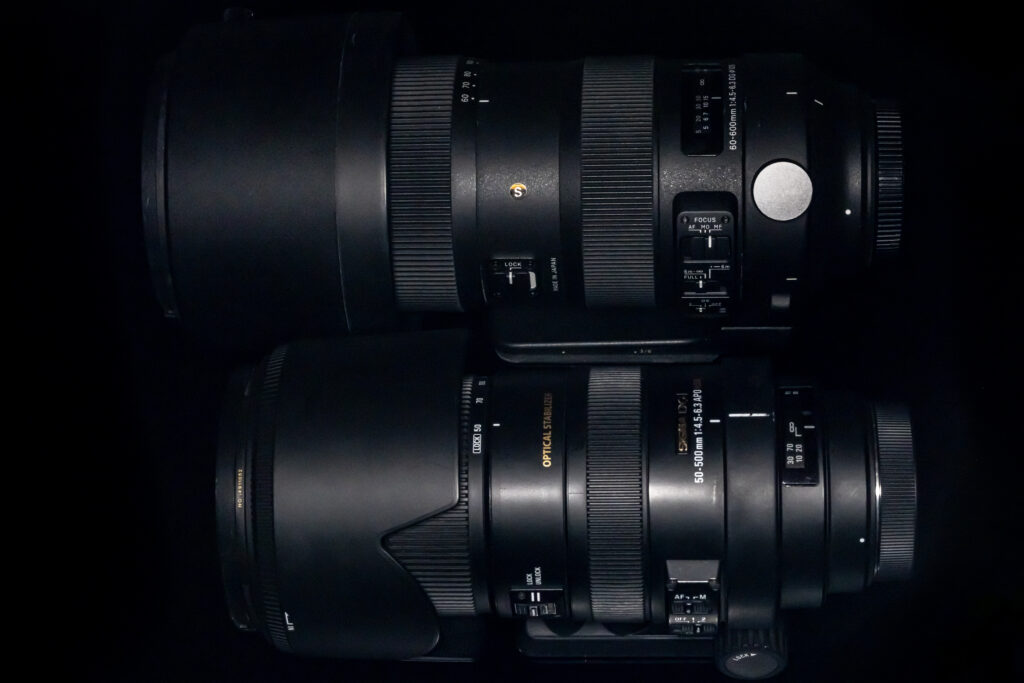
Sigma Art Macro 70mm 1/125 f/14 ISO 6400 Macro Ring Flash
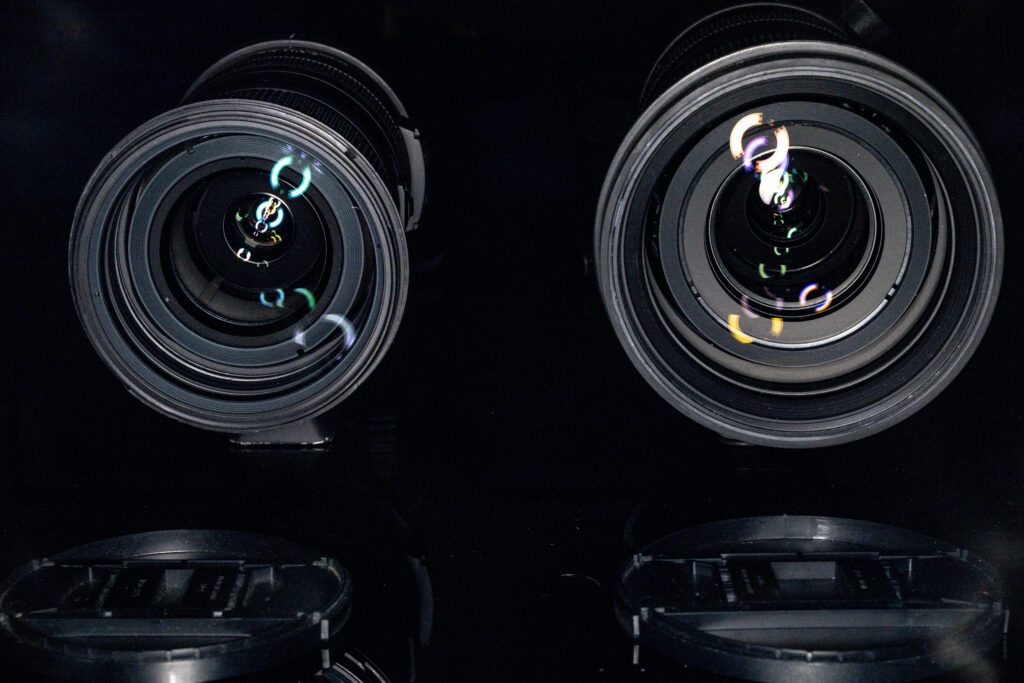
Sigma Art Macro 70mm 1/125 f/16 ISO 800 Macro Ring Flash
Sigma has been making its “Bigma” superzoom for years; a single lens that stretches from a usable wide to an impressive telephoto reach, all without swapping glass. It’s the one-lens solution for photographers who don’t want to miss a moment, whether that moment is a horse across a field or the moon hanging over a city. I’ve had the pleasure, and the back pain, of shooting both the older 50–500mm EF and the newer 60–600mm EF on my Canon R5 Mark II via an EF adapter. Here’s the honest breakdown.
Sigma Sport 60-600 EF Lens Collar Knob
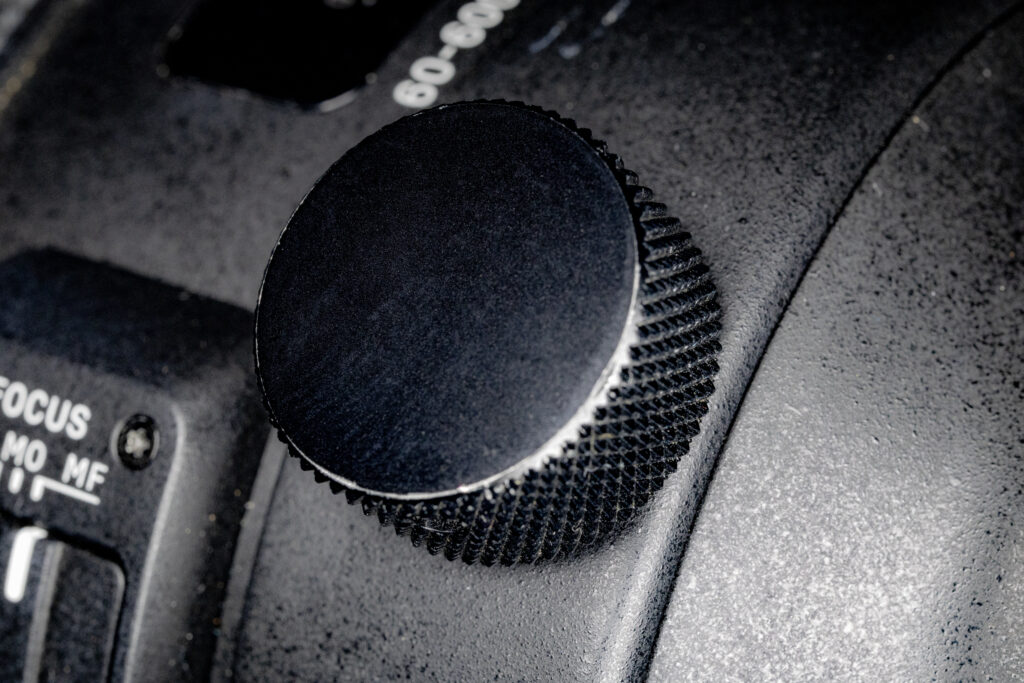
Sigma Art Macro 70mm 1/125 f/14 ISO 6400 Macro Ring Flash
Sigma Sport 60-600 EF Lens Foot
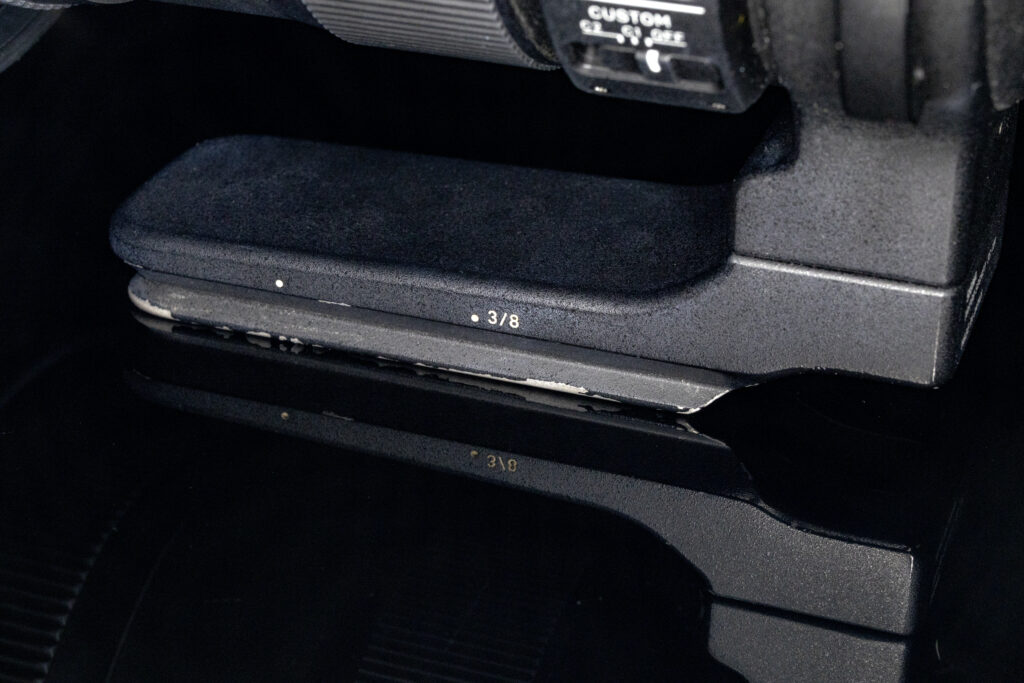
Sigma Art Macro 70mm 1/125 f/14 ISO 6400 Macro Ring Flash
Sigma DG 50-500 EF Lens Foot
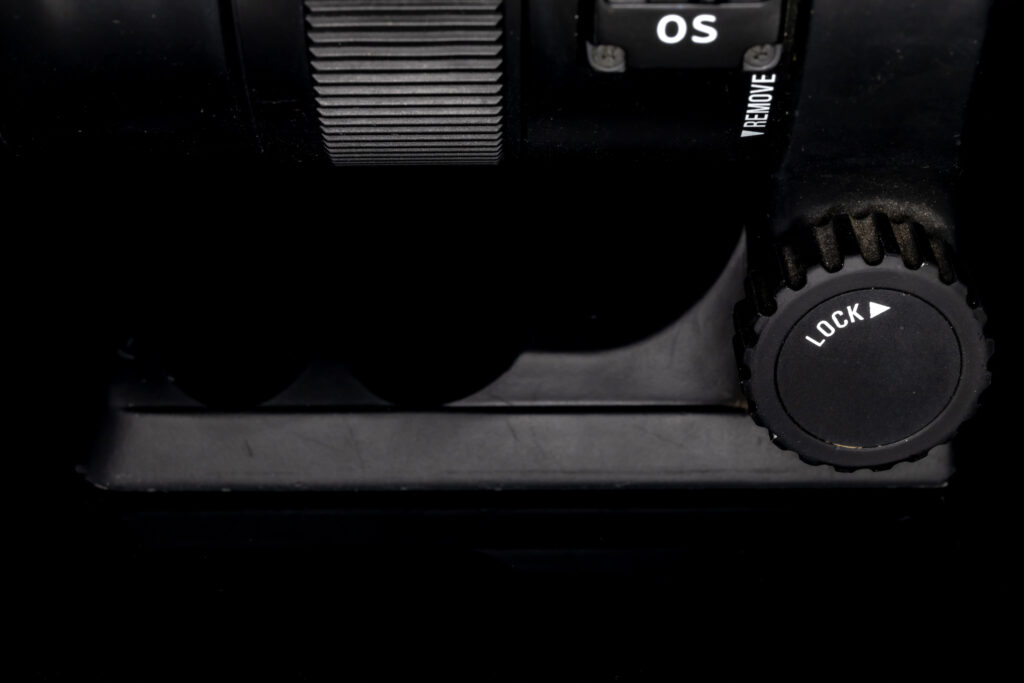
Sigma Art Macro 70mm 1/125 f/16 ISO 800 Macro Ring Flash
Miles walked, backs tested
I’ve walked several miles with the 60–600 and I felt it. Genuinely felt it. To be fair, the 50–500 has made me work for it too, but usually I’m carrying a couple extra lenses alongside it, spreading the weight around. Carry the 60–600 solo and it becomes the only thing you’re thinking about by mile two. Whether that’s the lens or my current fitness level, I’ll let you decide.
| Spec | Sigma 50–500mm EF | Sigma 60–600mm EF |
|---|---|---|
| Focal Range | 50–500mm | 60–600mm |
| Max Aperture | f/4.5–6.3 | f/4.5–6.3 |
| Construction | Plastic-heavy | Metal-reinforced |
| Collar / Foot | Manual alignment | Click-in rotation |
| Hand Grip | Ribbed, ergonomic | Standard |
| Weight | Lighter | Heavier (more metal) |
| Weather Sealing | Basic | Dust & splash resistant |
Image Quality & Reach
Let me be direct: getting to 600mm is genuinely exciting. That extra 100mm over the 50–500 isn’t just a number on paper, it changes what you can pull into frame. I shot the moon with it and the detail was remarkable. Los Angeles landmarks like Santa Monica Pier and SoFi Stadium came right up to the glass from distances that would have left the 50–500 working harder.
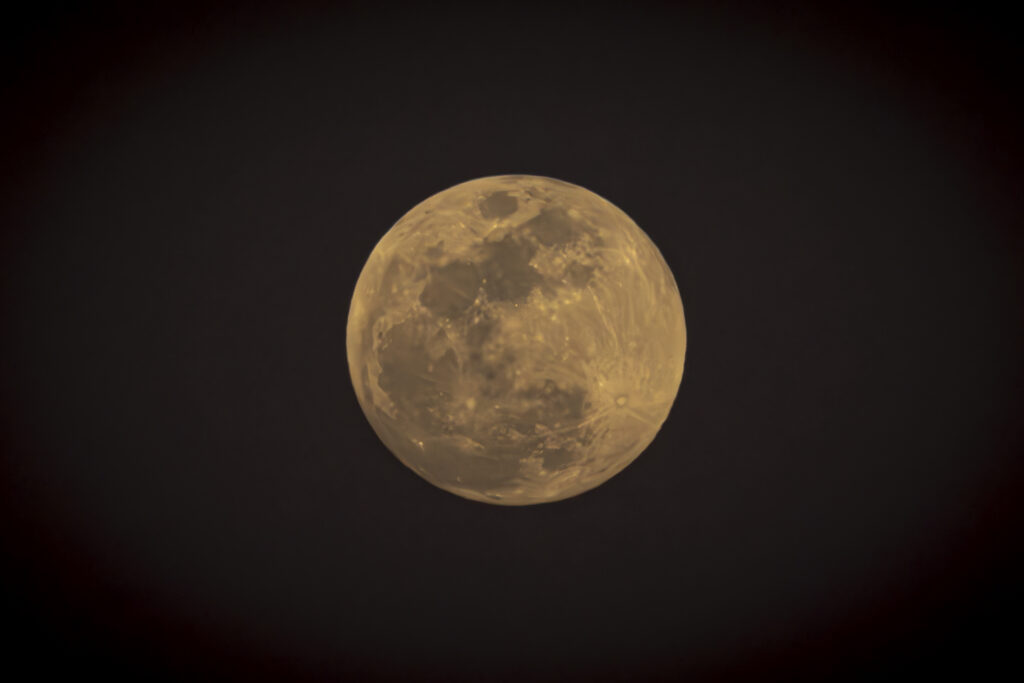
600mm 1/640 f/32 ISO 3200
600mm on the Canon R5 Mark II, the moon doesn’t need much convincing.
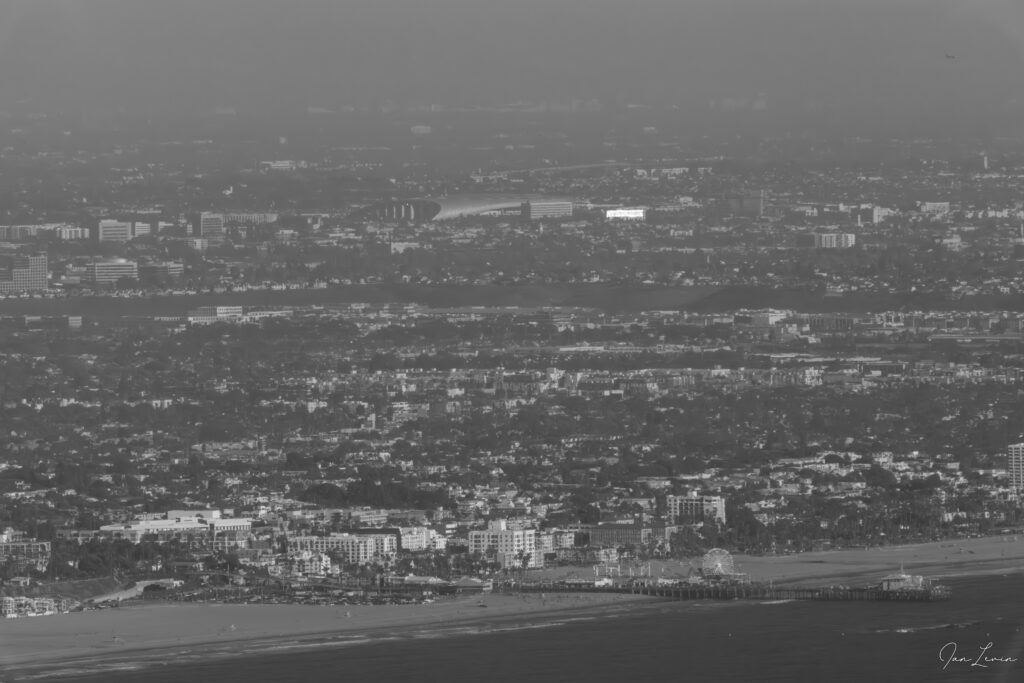
600mm 1/1000 f/32 ISO 3200
SoFi Stadium and Santa Monica Pier – Long Distance
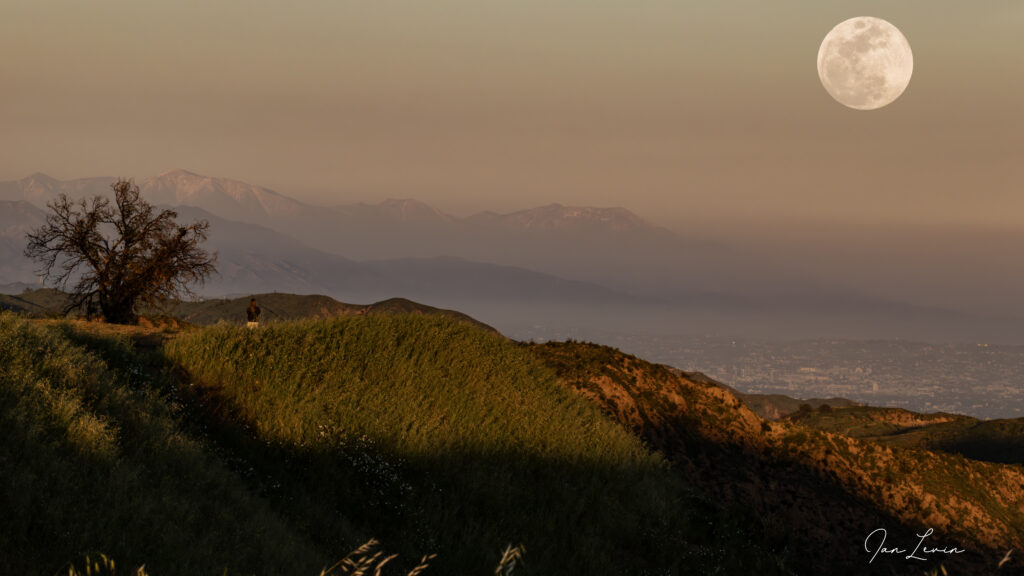
171mm 1/160 f/29 ISO 1600
600mm Moon shot composed into image
That little extra boost at 600mm changes what’s possible. You’re not just zooming in, you’re collapsing distance between your subject and their world.
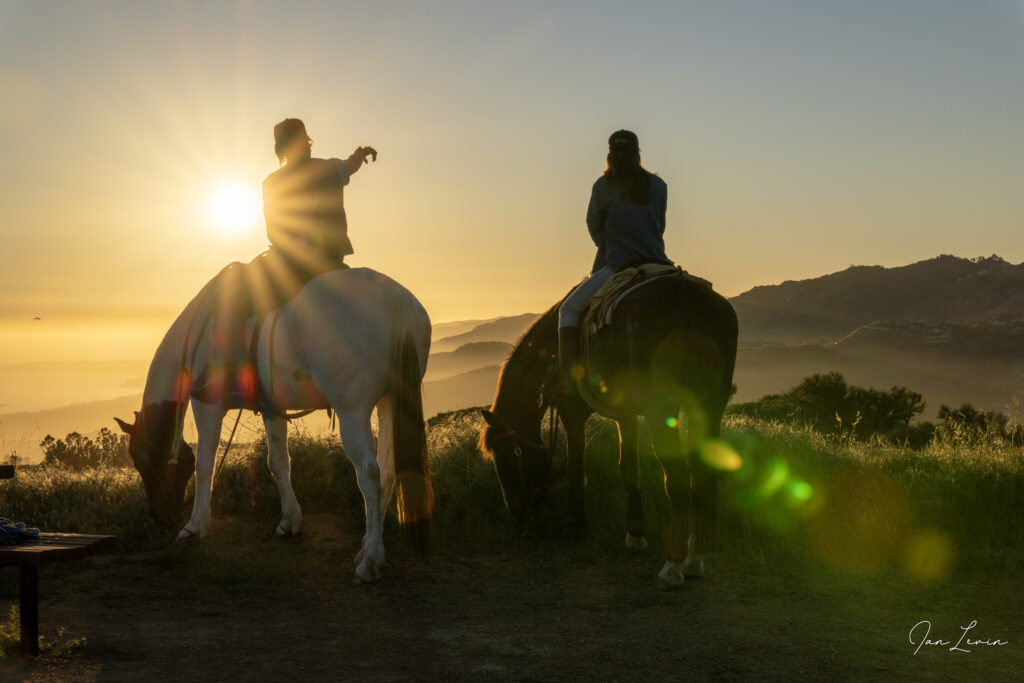
One of my favorite qualities of long glass is what it does to backgrounds: compress them, pull them in close behind your subject so they feel like they belong together. The 60-600 does this beautifully. Horses grazing with buildings stacked behind them, the city scape almost touching the animals. It’s that telephoto magic, and 600mm gives you more of it.
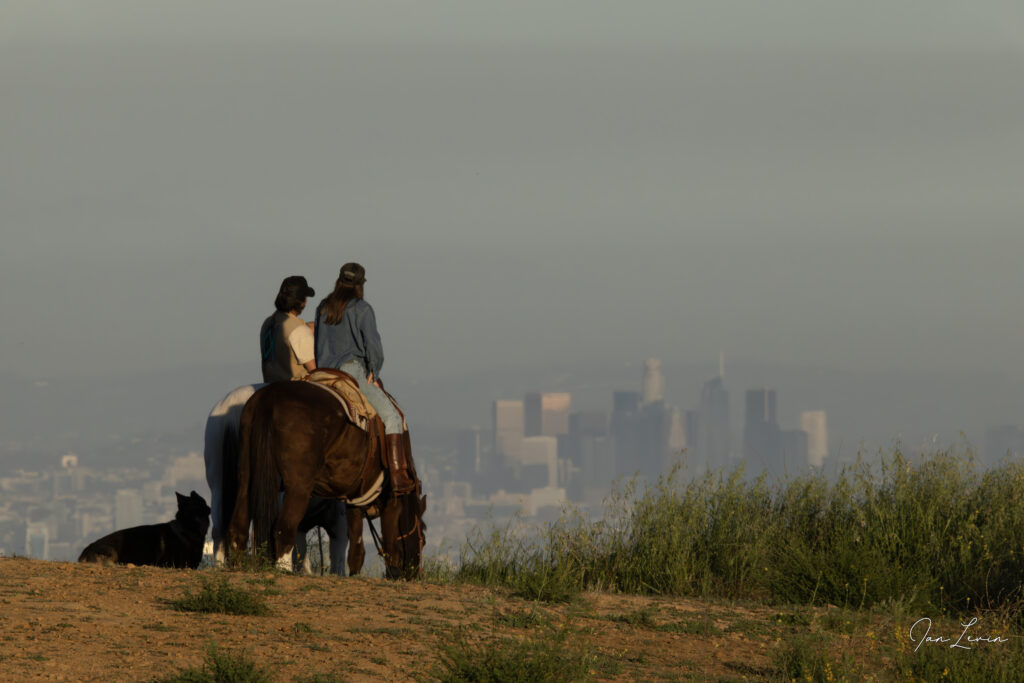
600mm 1/1600 f/22 ISO 4000
Telephoto compression at its finest; the background folds into the frame.
The closer end: it portraits, too
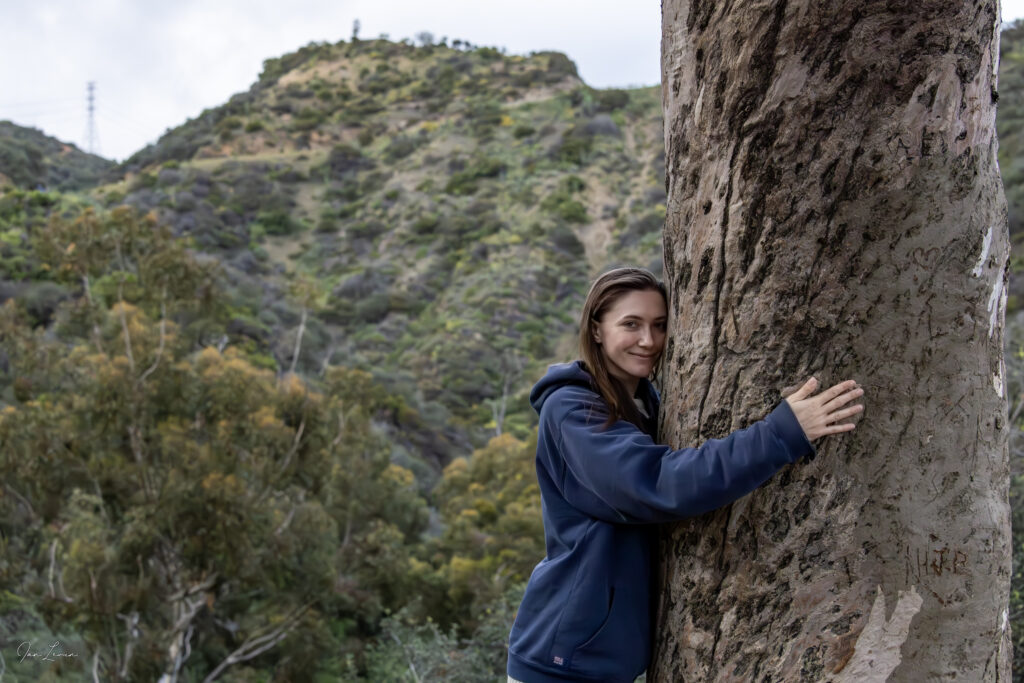
Don’t sleep on the 60mm wide end. This lens holds up surprisingly well as a portrait focal length. At 60mm and 122mm, the rendering is clean and flattering — not just a distant telephoto but a legitimate walk-around option when you need it.
60mm 1/250 f/22 ISO 320
60mm 1/2500 f/6.3 ISO 1280
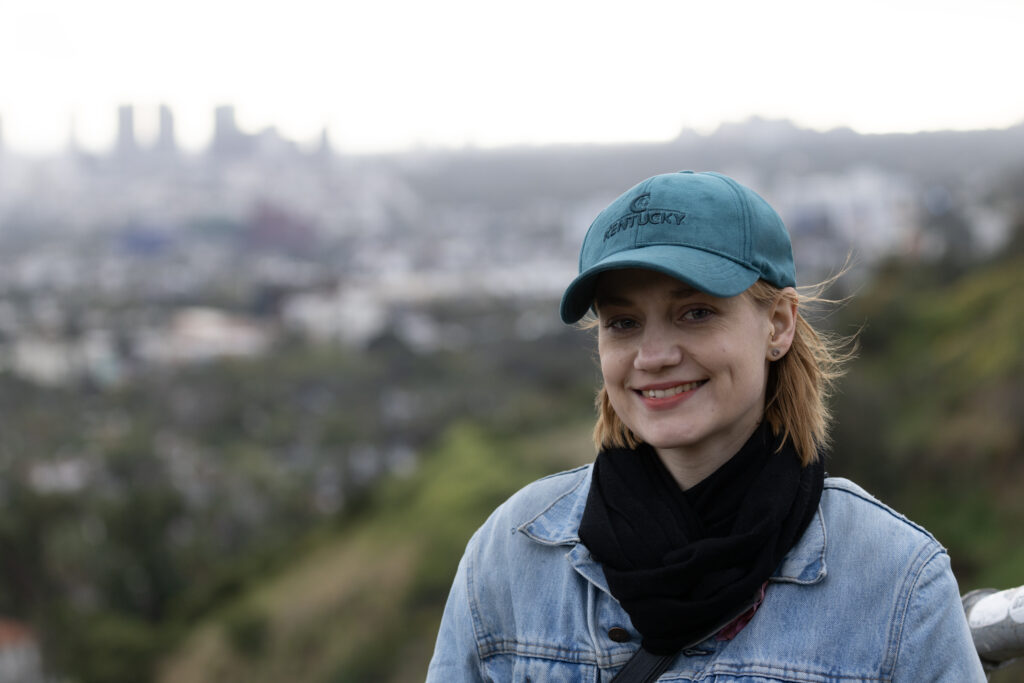
122mm 1/500 f/5 ISO 400
Sharpness across the range
Here’s where the generational gap shows up clearly. The 60–600 is sharp throughout its range, it doesn’t have a preferred sweet spot. The 50–500, by comparison, hits its peak sharpness around 300mm at f/8. It’s still a capable lens on full frame, and even better on the R5 Mark II sensor — but it has a zone where it performs best. The 60–600 simply doesn’t ask you to compromise.
Real-World Use: Weather, Sports & the Single-Lens Day
I shot the 60–600 in rain and moisture, not by accident, and it handled it without complaint. I stayed diligent, wiping down the lens before closing the zoom back up, same as I do with any extending zoom. The build quality gives you confidence to stay out longer and push through conditions the 50-500 might make you second guess.
The scenario where this lens makes the most sense to me is daytime outdoor sports, baseball and soccer (fútball) specifically. You can station yourself behind a tripod, cover the entire field from a distance, get tight on the action at 600mm and wide on the full play at 60mm, and never swap glass. One body, one lens, full coverage. That’s where the weight stops being a liability and starts being a justified trade.
Keep a lens cloth or two on you at all times. Every time, no exceptions.
✓ What the 60–600 Does Well
- 600mm reach is genuinely useful
- Sharp across the full range
- Click-in collar is fast and intuitive
- Solid metal build inspires confidence
- Better weather resistant in real conditions
− Where It Costs You
- Noticeably heavier for all-day carry
- No ribbed hand grip (minor but real)
- Significant price jump over the 50–500
Is the Upgrade Worth It?
Here’s where I land: if you don’t already own the 50–500, get the 60-600. The extra reach, the better build, the click collar; it’s the more complete tool. But if you’re sitting on a working 50–500 like I am, the math gets harder to justify.
Sigma 50–500mm EF (Used) $450–800
Sigma 60–600mm EF (Used/Refurb) $1,400–1,800 USD
That’s roughly a $1,000 gap between a working lens and its successor. My 50–500 came to me in an interesting way. I traded a brand new PS5 to get it, giving up on hours of screen time. Now that I’ve put money into a camera body upgrade, another major lens investment isn’t where I am in this journey. The 50–500 is getting the job done. Not as flashily, not with the same reach, but it’s doing it.
The Bottom Line
The 60–600 EF is the better lens by every optical and build measure. If you’re starting fresh, it’s the one to get; even used, even for a crop-sensor body like the Canon M50.
But “better” and “worth upgrading to” are two different questions. My 50–500 stays in the bag for now.
The one lens I’m genuinely considering moving to? Sigma’s 16–300 RF: compact, versatile, and based on my experience with their crop sensor glass, probably punching well above its class. There is a blog article below about this lens.
And that brings us to the pigeon.
There’s a particular pigeon I’ve been watching. The kind that stares back at you. The kind that knows things. The 50–500 is perfectly adequate for this specific use case, and for now, that’s enough.
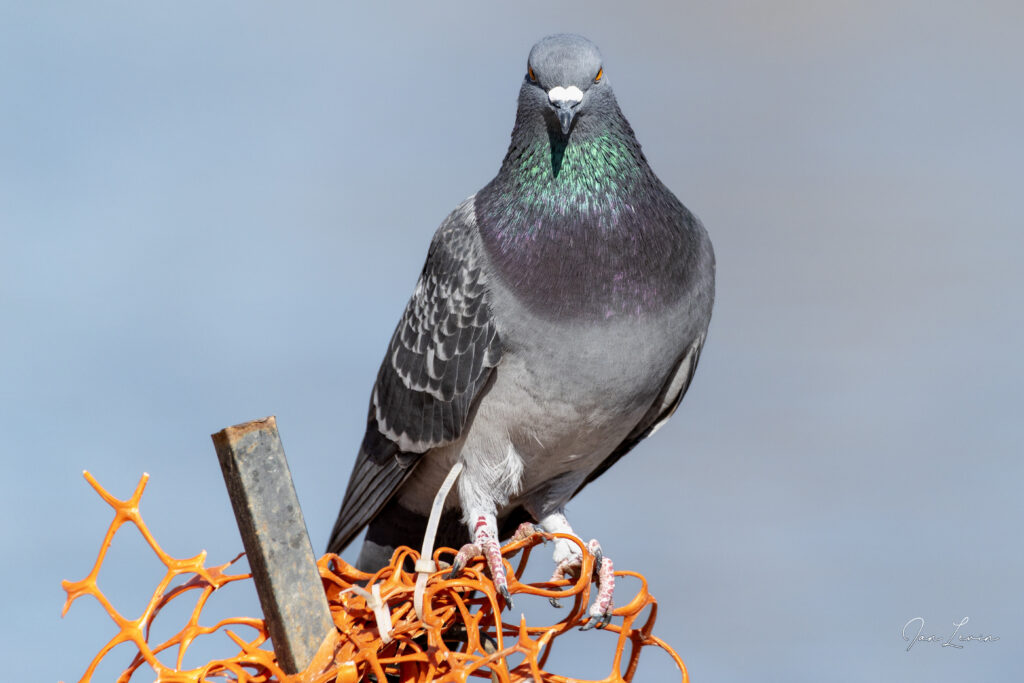
500mm 1/1000 f/7.1 ISO 250
Mean Pigeon
You know the one
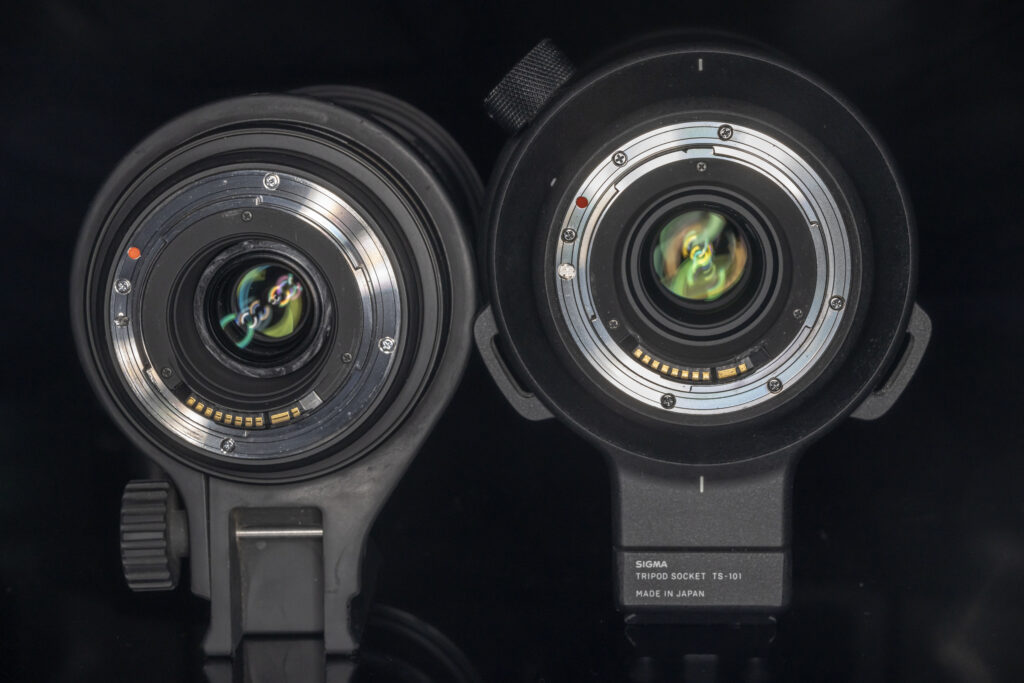
Sigma Art Macro 70mm 1/125 f/16 ISO 1600 Macro Ring Flash
Field Review: Sigma 16–300mm on the Canon R5 Mark II
A demo lens from Sigma USA, tested in the hills of Los Angeles
When Sigma USA in Los Angeles handed me the Sigma 16-300mm F3.5-6.7 DC OS Contemporary as a demo, I’ll be honest… I was skeptical.
Pairing a crop-sensor lens with a Canon EOS R5 Mark II isn’t the obvious choice when you’ve invested in full-frame resolution. The R5 Mark II is built for detail, dynamic range, and flexibility. Why handicap it with a DC (APS-C) lens? But that skepticism was the point of the test. The real question wasn’t whether this lens could replace large full-frame glass in a controlled setting. The question was: Can this be a true all-in-one travel lens for landscapes, wildlife, and close-up butterfly work; without constantly swapping lenses? To find out, I took it where I often test gear: into the hills.
First Stop: Trebek Open Space, West Hollywood Hills
I began the test hiking up Trebek Open Space, a quieter stretch of the West Hollywood Hills. The air still carries a memory of the fires from 2025, and I wanted to document what remained one year later.
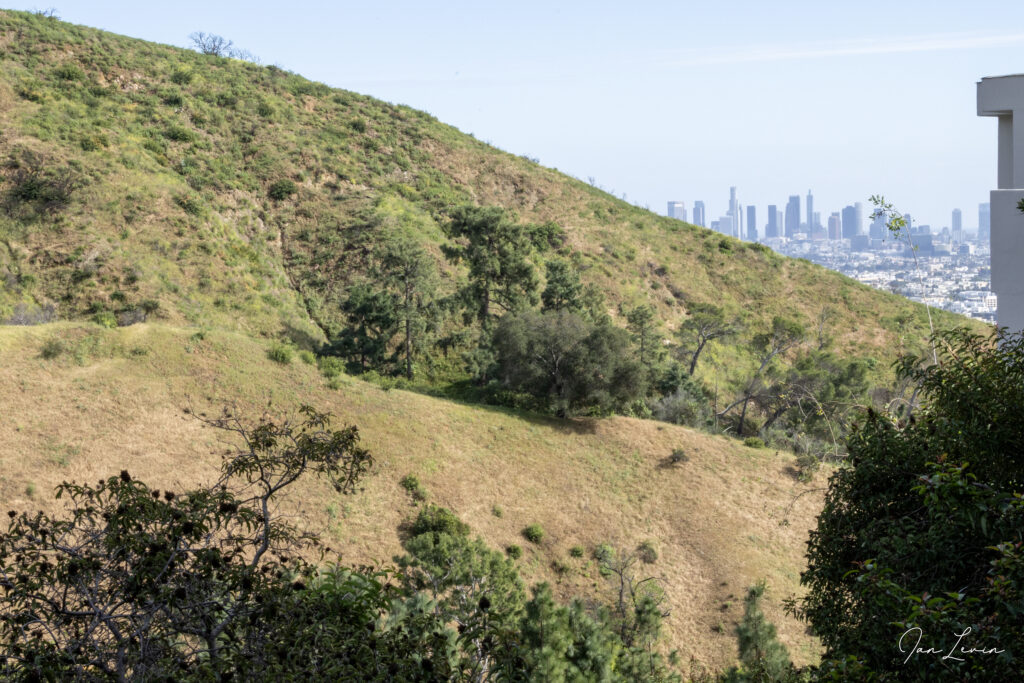
48mm 1/100 f/22 ISO 800
At the wide end (16mm), the lens immediately proved its versatility, while also revealing where it falls short compared to dedicated full-frame glass. Shooting stopped down at higher f-stops for deep-focus landscapes, I was able to render layered hills, charred textures, and the distant city atmosphere all within a single frame. As seen above, the image isn’t razor sharp edge-to-edge, and that’s part of the tradeoff. On a full-frame body, mounting a DC lens automatically engages crop mode, meaning you give up some of the R5 Mark II’s full 45MP resolution. That was my biggest hesitation going in. In real-world use, though, the files remained decently sharp, detailed, and absolutely usable for professional output, more than enough for large prints and client work.
From Wide to Intimate – Without Moving
One of the benefits of a 16-300mm range is compositional freedom.
As I moved along the trail:
- I photographed a single flower catching late morning light.
- A butterfly paused long enough for a close frame.
- A raven cut across the canyon skyline.

Sacred Thorn-apple
52mm 1/100 f/32 ISO 500
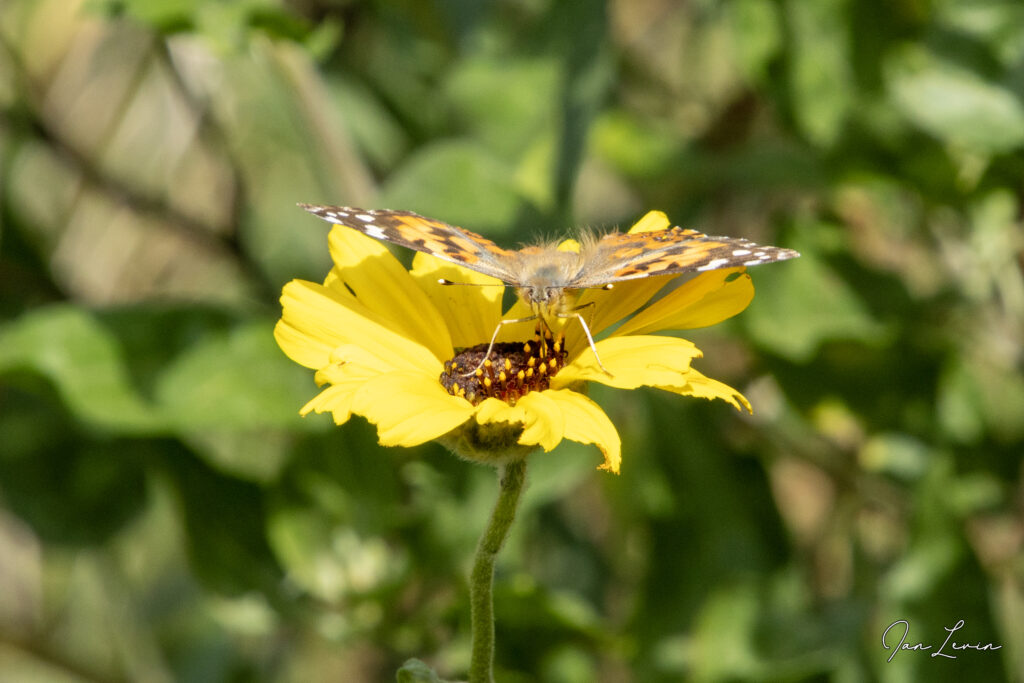
300mm 1/400 f/16 ISO 1250
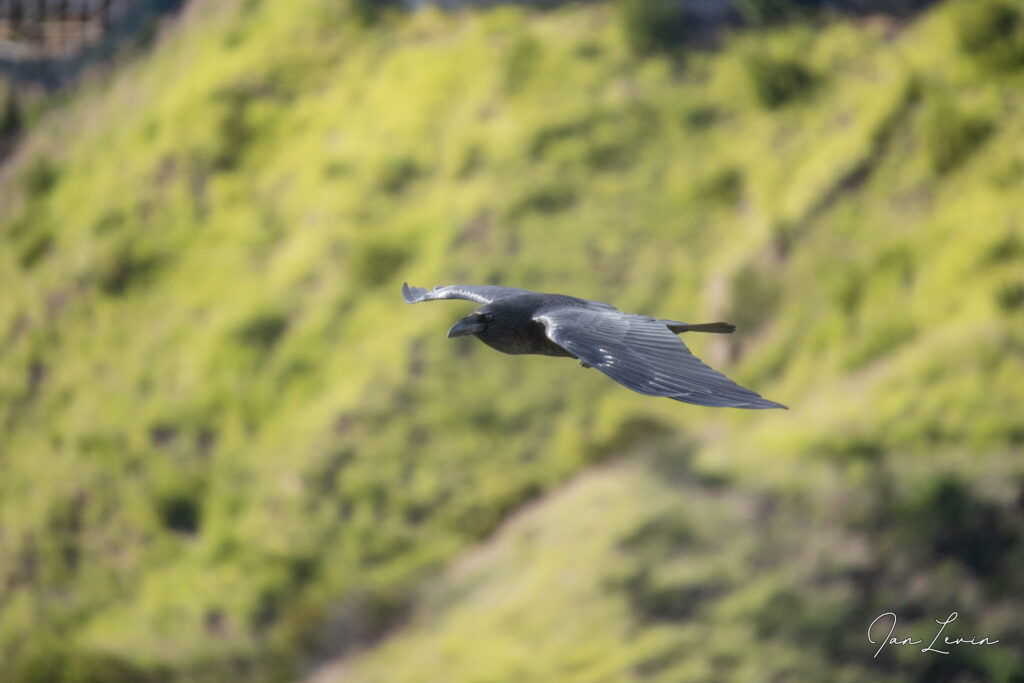
300mm 1/1600 f/7.1 ISO 2000
Now, let’s be clear:
Tracking fast-moving wildlife is still better handled by large, dedicated full-frame telephoto lenses. The autofocus wasn’t as sticky on moving birds in flight compared to pro-level RF glass. But I did get the shot I wanted and that’s important. For a lens this compact and versatile, it performed admirably. If you’re expecting 400mm f/2.8 performance, you’re asking the wrong question. If you’re asking whether you can capture spontaneous wildlife moments while hiking light; the answer is yes.
Back Down the Hill: Wattles Farm
Later that evening, I went down to Wattles Farm, a community garden where I often work on macro and wildlife photography. This time, I approached it differently. Instead of pure macro, I did some birding at sunset, mounting a Canon 600EX Speedlite (off-camera flash is my usual preference, but here I kept things simple and mobile). At 300mm, from roughly 25–50 feet away, the lens held up very well. When birds paused, I could quickly zoom, lock focus, and capture clean, detailed frames.
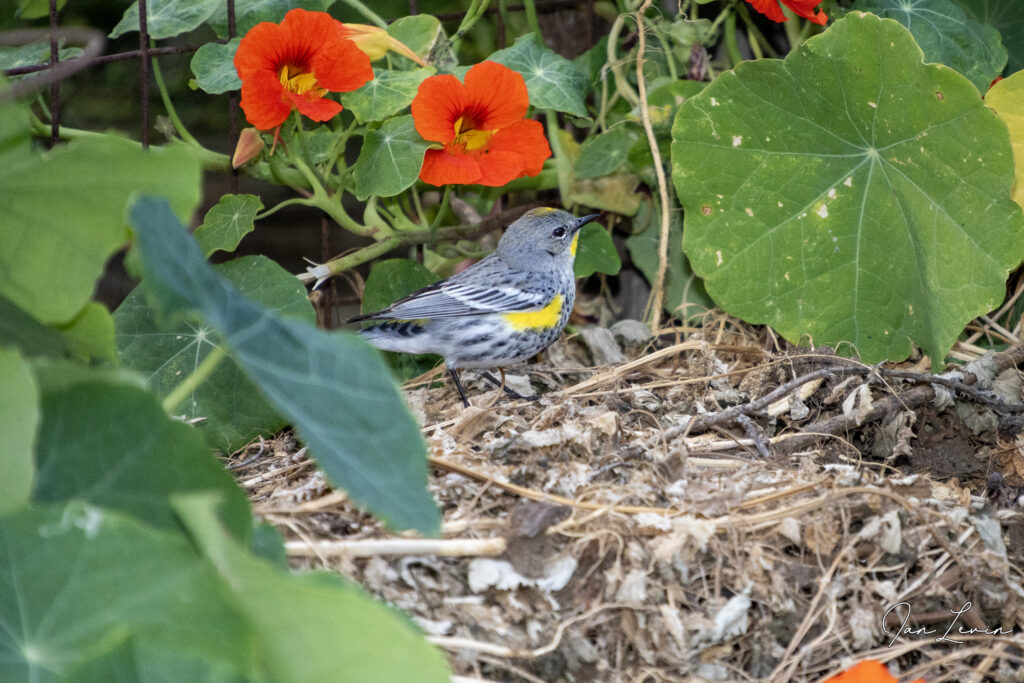
300mm 1/250 f/7.1 ISO 5000
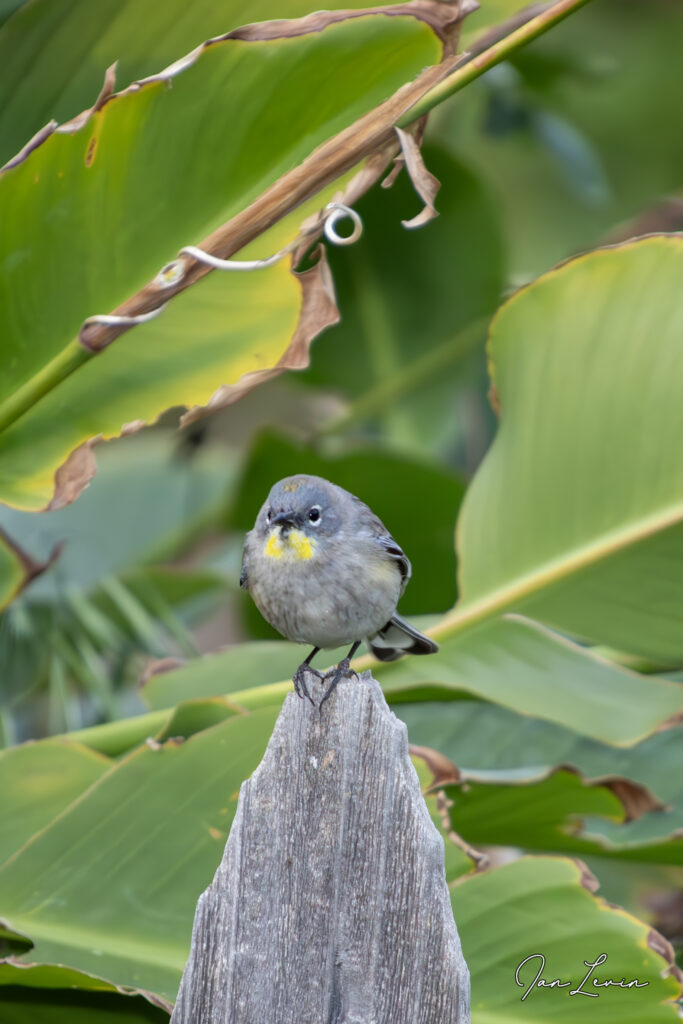
300mm 1/250 f/7.1 ISO 5000
Autofocus performance surprised me. I’d estimate about a 95% hit rate for static or lightly moving subjects. I didn’t need to dive into settings; I mostly operated by adjusting zoom and letting the R5 Mark II’s AF system do its work.
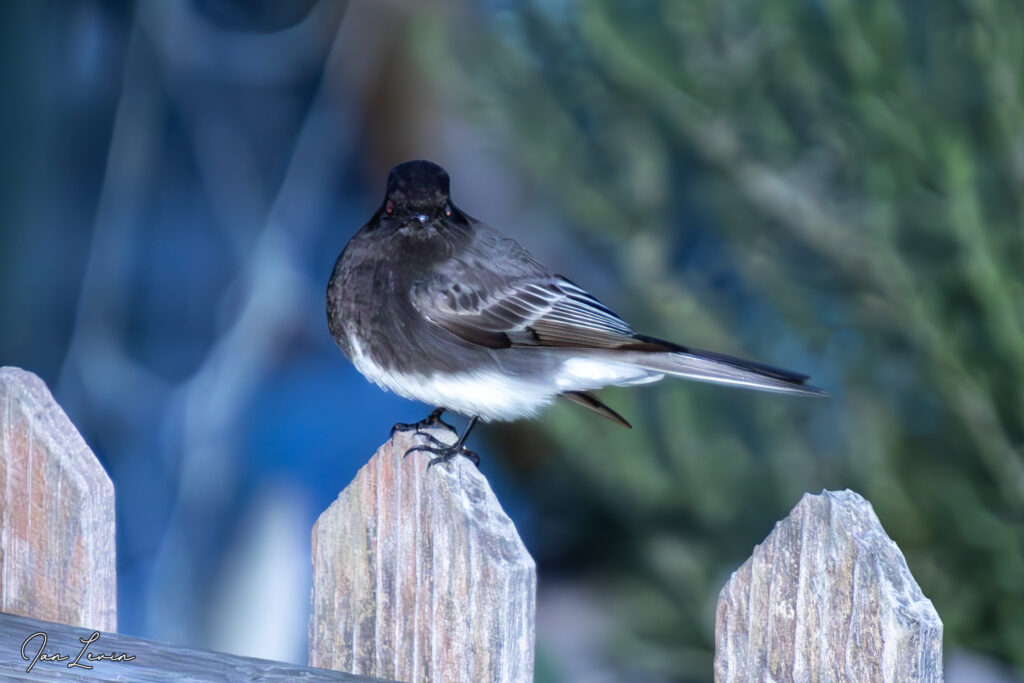
300mm 1/160 f/7.1 ISO 6400
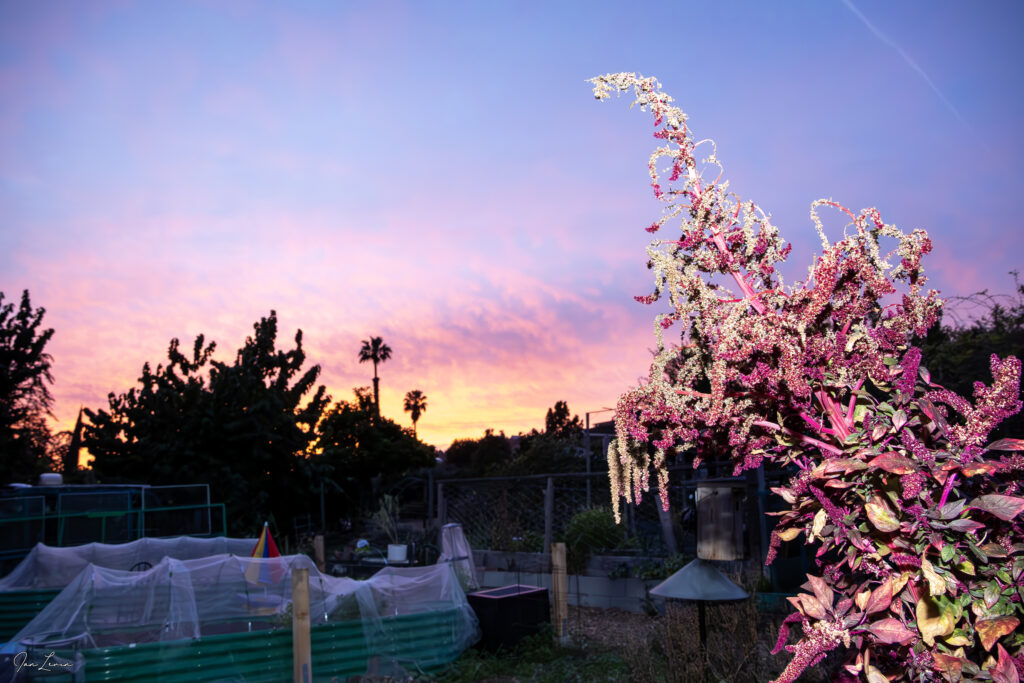
16mm 1/160 f/7.1 ISO 4000
As night fell, the flash transformed the scene. Wildlife and plants gained separation and presence against the darkening background.
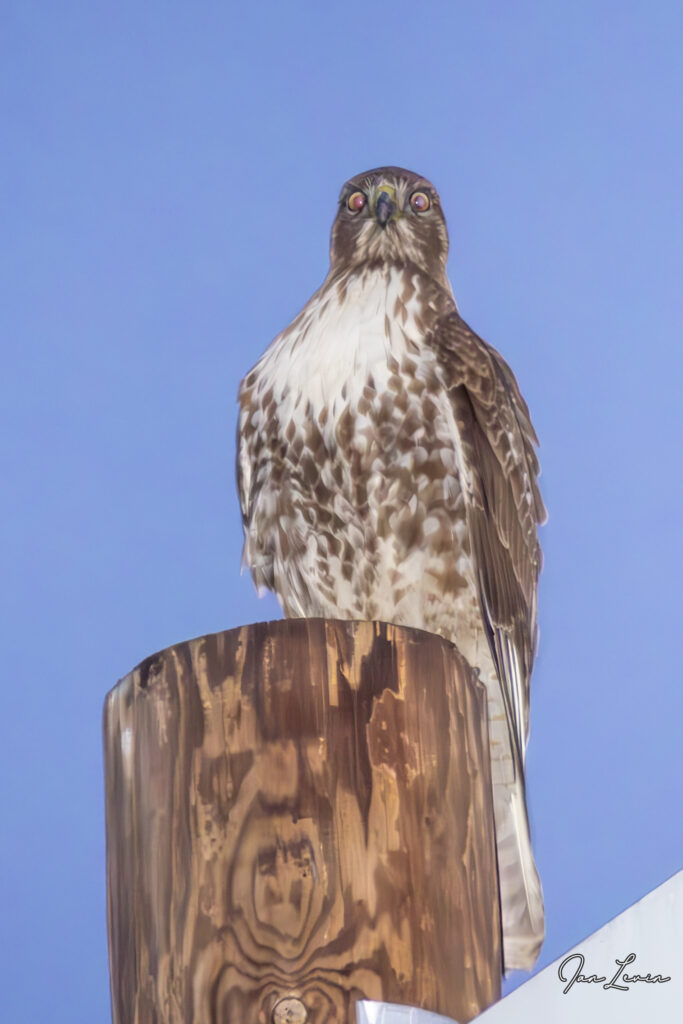
300mm 1/200 f/7.1 ISO 6400
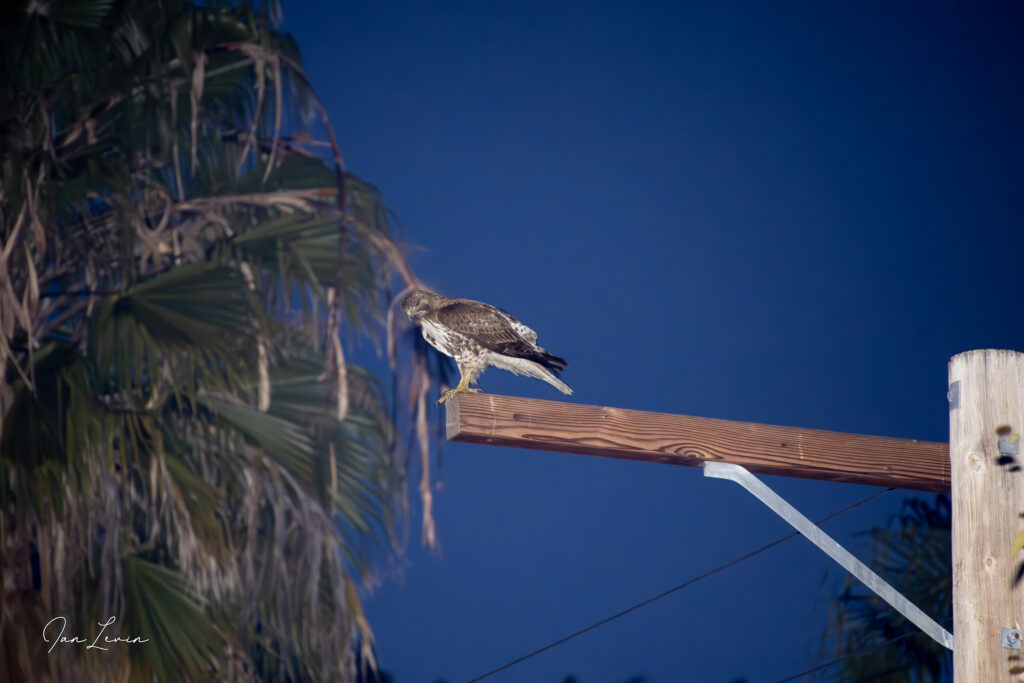
300mm 1/160 f/7.1 ISO 6400
For a compact superzoom, that kind of flexibility is powerful.
Ergonomics & Practical Notes
There is one operational detail worth mentioning.
Unlike many telephoto lenses, there’s no dedicated AF/MF switch on the barrel. If you want to toggle between autofocus and manual focus, you’ll need to assign it to a programmable button on the camera — which is exactly what I’d recommend. Once I set that up, it became far more intuitive. The control ring is useful, but I did occasionally find it slightly inconvenient to adjust focus mode via menu before customizing a button. That’s a small workflow tweak, not a dealbreaker.
The Big Question: Does It Make Sense?
Here’s the reality:
- You lose full-frame coverage and about 37% to 53% resolution.
- It won’t outperform large dedicated telephoto lenses.
- It’s not a replacement for specialized macro glass.
But…
For its size, price point, and range, the Sigma 16–300mm is incredibly compelling.
Paired with a capable body like the Canon R5 Mark II, you gain:
- A lightweight travel setup
- True wide-to-super-tele coverage
- Reliable autofocus
- The ability to go from landscape to wildlife in seconds
And that’s the key. When hiking in the wilderness, especially up and down steep terrain, minimizing gear matters. Not changing lenses in dusty or windy conditions matters. Being ready when a butterfly lands or a bird crosses the canyon matters.
Final Thoughts
Going into this test, I doubted whether a crop-sensor lens belonged on a full-frame flagship body. After a full day in the hills, I see its purpose clearly. This is not about maximizing megapixels. It’s about maximizing opportunity. If you’re looking for a true all-in-one travel lens; something versatile enough for landscapes, wildlife, and spontaneous close work; the Sigma 16–300mm deserves serious consideration. And with the R5 Mark II behind it, it absolutely delivers.
The Evolution and Future of AI: A Journey of Efficiency and Human Collaboration
Artificial Intelligence (AI) has been a buzzword for years, capturing the imagination of both the tech-savvy and the general public. While it may seem like a recent phenomenon, AI has been around for more than a decade, steadily evolving and embedding itself into various facets of our lives. Its journey from a niche technology to a mainstream tool has been marked by significant milestones and achievements, yet it remains a complementary force to human capabilities rather than a replacement.
The Early Days of AI
AI’s roots can be traced back to the mid-20th century, but its practical applications began gaining momentum in the early 2000s. Early AI systems were primarily rule-based, designed to perform specific tasks within well-defined parameters. Examples of early products include the child’s pet toy Furby and the iRobot Roomba vacuum, successful pioneers at producing a type of AI to reach domestic environments. These systems, while impressive for their time, lacked the flexibility and learning capabilities of modern AI.
The past decade, however, has seen exponential growth in AI development. The advent of machine learning and deep learning has transformed AI from a set of rigid algorithms to a dynamic, learning entity capable of processing vast amounts of data and making decisions based on patterns and trends. Technologies such as natural language processing (NLP), computer vision, and neural networks have pushed the boundaries of what AI can achieve.
AI as a Tool for Efficiency
Despite its impressive advancements, AI’s primary role has remained that of a tool designed to enhance efficiency and productivity. Businesses and industries across the board have leveraged AI to streamline operations, improve customer service, and optimize resource management.
- Healthcare: AI has revolutionized diagnostics, patient care, and medical research. From predictive analytics that foresee potential outbreaks to personalized medicine tailored to individual genetic profiles, AI is making healthcare more efficient and effective.
- Finance: In the financial sector, AI algorithms analyze market trends, detect fraudulent activities, and provide personalized financial advice. Automated trading systems and robo-advisors are becoming increasingly common, making financial services more accessible and reliable.
- Retail: AI-driven recommendation systems, inventory management, and supply chain optimization have transformed the retail landscape. Companies can now predict consumer behavior with remarkable accuracy, ensuring better product availability and customer satisfaction.
- Manufacturing: AI-powered robotics and automation have revolutionized manufacturing processes, increasing precision and reducing production times. Predictive maintenance algorithms help prevent equipment failures, minimizing downtime and costs.
AI in Creative Workflows: The Case of Photoshop
One of the most profound impacts of AI has been in the realm of creative industries, particularly in tools like Adobe Photoshop. AI has significantly enhanced the workflow of designers, photographers, and artists, making their creative processes faster and more intuitive.
- Automated Editing: AI-powered features such as Adobe Sensei provide intelligent editing tools that automatically adjust lighting, color balance, and remove imperfections. This allows users to achieve professional-quality results in a fraction of the time it would take manually.
- Content-Aware Fill: One of Photoshop’s standout AI features, Content-Aware Fill, intelligently fills in gaps when objects are removed from an image. By analyzing the surrounding content, AI generates realistic backgrounds and textures, saving hours of meticulous manual editing.
- Object Selection and Masking: AI-driven tools like Select Subject and Object Selection make it easy to isolate objects from their backgrounds with remarkable accuracy. These tools use machine learning to recognize edges and shapes, allowing for precise selections and masks that would be challenging to achieve manually.
- Neural Filters: Photoshop’s Neural Filters leverage AI to apply complex transformations and effects with ease. Whether it’s age manipulation, facial expression changes, or colorization of black-and-white photos, these filters enable creative experimentation and rapid prototyping.
Updates in Photoshop has not only improved workflow efficiency but also empowered users to push the boundaries of their creativity. AI-driven tools help bring out human imagination by enabling users to transgress ideas quicker, thus translating thoughts into tangible creations faster than ever before.
AI in Video Content Creation: DaVinci Resolve and Premiere Pro
AI’s impact extends beyond static images to video content creation, where tools like DaVinci Resolve and Adobe Premiere Pro have harnessed AI to revolutionize editing workflows.
- Automated Editing and Cuts: AI algorithms in Premiere Pro can analyze video content to identify key scenes, make automatic cuts, and suggest edits based on narrative flow. This significantly reduces the time editors spend on mundane tasks and allows them to focus on creative storytelling.
- Color Grading and Correction: DaVinci Resolve’s AI-driven color grading tools can automatically match color tones across different clips, ensuring a consistent look throughout the video. AI can also suggest color corrections, making it easier for editors to achieve cinematic-quality visuals.
- Motion Tracking and Effects: Both DaVinci Resolve and Premiere Pro leverage AI for advanced motion tracking. AI can automatically track objects and apply effects, such as blurring or highlighting, which would otherwise require tedious manual keyframing.
- Audio Enhancement: AI-powered audio tools can automatically adjust levels, remove background noise, and enhance speech clarity. This ensures high-quality audio without extensive manual tweaking, streamlining the post-production process.
- Scene Detection and Metadata Tagging: AI can analyze video footage to detect scenes, identify objects, and tag metadata. This makes it easier to organize and search through large amounts of footage, enhancing workflow efficiency and saving time.
By integrating these AI capabilities, video editing software has transformed how editors work, enabling them to produce high-quality content more efficiently. AI enhances creativity by taking over repetitive tasks and allowing creators to focus on refining their artistic vision.
AI and Human Imagination: A Synergistic Relationship
One of the most exciting aspects of AI’s evolution is its ability to amplify human creativity and imagination. By handling routine tasks and processing vast amounts of data, AI tools free up cognitive resources, allowing users to focus on more imaginative and strategic endeavors. This symbiotic relationship between AI and human creativity accelerates the ideation process, enabling thoughts to transgress from concept to reality faster than ever before.
- Creative Industries: In fields like art, music, and writing, AI tools can generate ideas, suggest improvements, and even create original content. This not only enhances the creative process but also allows artists and writers to experiment with new forms and styles more freely and efficiently.
- Product Development: AI-driven design and prototyping tools enable faster iteration and innovation in product development. Engineers and designers can quickly test ideas, gather feedback, and refine their creations, accelerating the time from concept to market.
- Research and Development: In scientific research, AI can analyze vast datasets, identify patterns, and suggest hypotheses. This allows researchers to focus on high-level thinking and exploration, pushing the boundaries of knowledge and discovery at an unprecedented pace.
- Education and Training: AI-powered educational tools provide personalized learning experiences, helping individuals acquire new skills and knowledge more effectively. This supports lifelong learning and ensures that people can adapt to changing technological landscapes.
The Future of AI: A Collaborative Force
As we look to the future, AI will undoubtedly continue to expand its capabilities and influence. However, it is crucial to recognize that AI will not wholly compensate for human abilities. Instead, it will serve as a powerful collaborator, augmenting human skills and creativity.
- Human-AI Collaboration: The future will see more seamless integration between human workers and AI systems. AI will handle repetitive and data-intensive tasks, freeing humans to focus on creative problem-solving, strategic thinking, and interpersonal interactions.
- Ethical Considerations: As AI becomes more pervasive, addressing ethical concerns will be paramount. Ensuring transparency, fairness, and accountability in AI systems will be essential to maintain public trust and prevent misuse.
- Lifelong Learning: The rapid pace of AI development necessitates a commitment to lifelong learning. Both individuals and organizations will need to continuously adapt and upskill to keep pace with technological advancements.
- Societal Impact: AI’s expansion will have profound implications for society. Policymakers, educators, and industry leaders must work together to ensure that AI’s benefits are broadly shared and that its challenges are proactively addressed.
Conclusion: The Imperfection of AI and the Need for Human Touch
AI has come a long way in the past decade, evolving from a niche technology to a powerful tool that enhances efficiency across various sectors. Looking forward, AI will continue to grow and integrate more deeply into our lives, but it will not replace human capabilities. Instead, it will serve as a collaborative force, augmenting our skills and enabling us to achieve greater heights. Embracing this symbiotic relationship will be key to unlocking AI’s full potential and shaping a future where technology and humanity thrive together.
However, it is important to recognize that AI is not perfect. AI systems, while powerful, can make errors, miss nuances, and lack the subjective judgment that human creativity and intuition provide. In creative spaces, AI can suggest ideas, automate repetitive tasks, and enhance workflows, but it cannot fully replicate the human touch. Human interaction is necessary to review and refine the autonomous work produced by AI, ensuring that the final output meets the desired artistic and ethical standards. By leveraging AI to amplify human creativity and imagination, we can bring our ideas to life faster and more effectively, while maintaining the irreplaceable value of human insight and oversight. This balanced approach will pave the way for a more innovative, prosperous, and harmonious future.
Move Forward
A journey consists of ups and downs, progression and drawbacks. What is important is the perseverance along the way and keep moving in one direction, forward. Others who don’t get this want to draw you back from your goals. They are not ones to bring along the journey. The supporters are the ones to bring along. They get the good energy seeing you succeed. They are happy for you. When being considered to join another for a project, I have made the mistake for not thoroughly interviewing them to see how they can take responsibility. What I’m looking for is the admission to fault, It’s that simple. If they are somehow always right, it’s too good to be true, and it is. Red flag, these folks don’t move forward, they point to others to push them back.
Boundaries are very important. Those who can’t respect them deserve the worst. They’re not moving forward, they’re going sideways, at best. What I noticed is too many fall to the dark side of energy, allowing negative connotations to draw them back and everyone else around. I tell them, “I don’t respond to that”. They need to get to my level or respect, and if they can’t, bye bye. I’m not afraid to walk away from a bad experience.
A Foundation Remains
While not having written on this site in quite an extensive period of time, the foundation for creativity strives. I most recently left the last editing gig for a few reasons. Here is what happened and the takeaways.
Firstly, the work stopped being fun. This is a major flag. When not finding even a little spark of joy in the tasks, no matter how mundane, it’s a sign of the time, to move on.
Secondly, money issues since day one. When coming onto a project and hearing “We don’t have the budget for…” or “There is no money for…” is very unwelcoming. That’s a statement that should be sparred to say to others which is not their problem. Would rather hear “Let’s see how the budget can be arranged.” or “Let’s see what different means we can come up with around this expensive undertaking”. This is progress, not nonsense. It’s better to be solution oriented than vent the problem.
Thirdly, not getting answers. When given a directive, then asking details about it and only hearing a deflection in the form of a repeat of the task is not helpful. It’s acceptable to say “will get back with to that, finding out more details.” This allows for time on other tasks, makes the decelerator think it through and it’s also a means of following up.
Lastly, those who I was working with, were becoming too stressed. Spreading energy of anxiousness, being a downer, or further negative thoughts does not benefit. It sends folks like myself running away. This is not to say everyone was stressed, it was more so a few individuals whom did not seem to want to help themselves.
It’s easy to say “We had creative differences” and leave it at that. Such a statement does not harm reputation and protects against negative energy, which is the best means of going about it. When Einstein wrote on the board to his class, 9 x 10 = 81, everyone exclaimed that’s wrong, even though he wrote 9 x 9 = 81 as well as the multiplication of 1 though 9 (9 x 1 = 9, 9 x 2 = 18, etc) prior and correctly. His lesson is to not teach elementary math, however it’s to demonstrate that society sees what’s wrong first, rather than seeing what’s right. Someone can be 90% proper, but is shamed upon for the 10% wrong. There are no grades outside of school; only those who can’t see the benefit of the doubt, and that’s their problem.
In Memoriam
I’ll never forget to the cherish memories of my elementary school field trips. Two of which, were to a place that was tragically destroyed 15 years ago. Being up there on the air-opened observation deck, was like no other place. It felt like a floating island above the metropolis I called home. The views of the city, the edge of the world, cool winds blowing all around with gravity beneath my feet; can’t compare to anything else. I could gaze out in any different direction, and find something new. That to me was New York City. To this day, no other high point made by humans compares to the roof platform of the World Trade Center. It saddens me to see images of such a marvel destroyed and the lives who have fallen with it. I feel very fortunate to have such an experience and live to tell about it.#NeverForget
Blood Orange Moon, a circle of confusion
